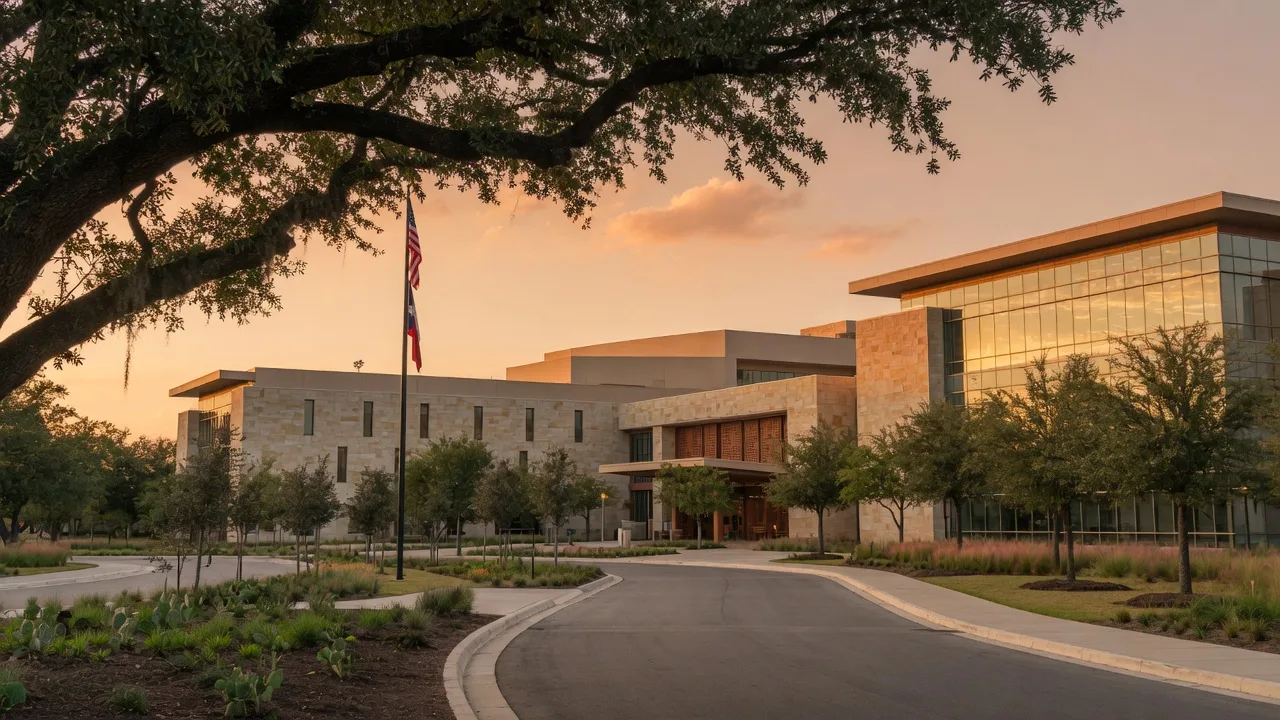
Doctors and physicians are relocating to Central Texas in growing numbers, and it is easy to see why. This region is home to Baylor Scott & White, whose roots run deep in Temple, alongside major systems like Ascension Seton and St. David's HealthCare. Texas offers physicians no state income tax, a physician-friendly liability climate shaped by the 2003 reforms, and a cost of living that keeps Austin within reach without the Austin price tag. If you are a doctor weighing a move, I am Lisa Copeland, and my team and I have made physician relocation to Central Texas our specialty: the campuses, the commute towns, and the homes that fit your family.
Why Are Doctors Relocating to Central Texas?
Physicians relocate here for the same reasons families do, plus a few that only make sense to a doctor. The region is anchored by a major teaching-hospital system in Baylor Scott & White, it offers multiple hospital systems in adjacent metros, and it combines a no-state-income-tax paycheck with liability reforms that the Texas Medical Association has defended for more than 20 years. Add a lower cost of living than most physician-heavy metros, and Central Texas becomes one of the most practical places in America to practice medicine and build a life. My job is to make the real estate side of that move feel effortless, and to make sure the home you choose fits the hospital where you will spend your days.
Helping Doctors Make Central Texas Home
Let me be direct with you, the way I am with every relocating physician I work with: a move of this size deserves a guide who has done it before, many times. My team and I have helped relocating professionals and families settle across Central Texas, and we have built our practice around the things that actually matter on move-in day. We know every hospital campus in the region, from The Hill in Temple to the Round Rock and Georgetown corridors. We know which commute town fits which schedule, Belton for the 15-20 minute drive, Salado for the small-town quiet, Georgetown and Round Rock for the metro amenities. And because financing is where many physician moves stall, I connect my buyers with the right mortgage partner: my husband James Copeland runs Central Texas Mortgage, and his team understands physician loans, from low down payments to student-debt-friendly underwriting. Whether you are six months out or ready to look this weekend, reach out and let us build your plan.
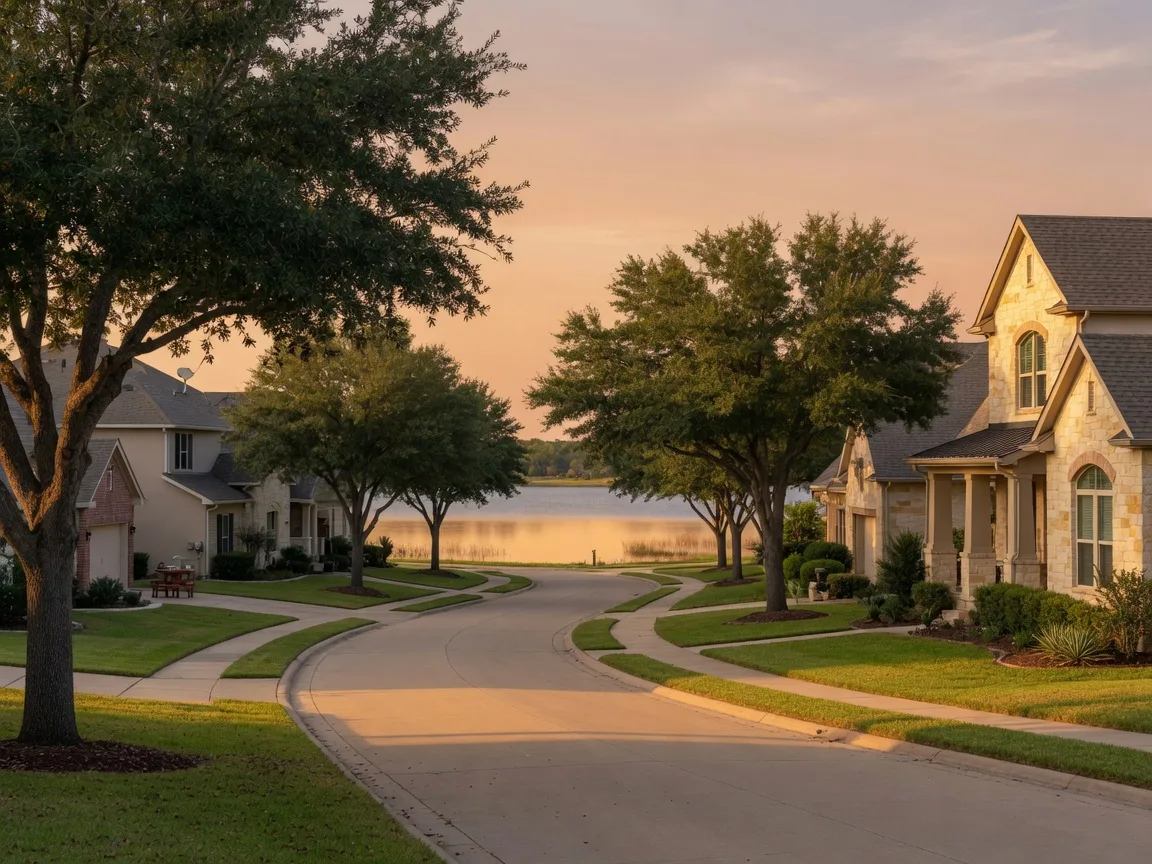
Baylor Scott & White in Central Texas
If you are relocating to work here, you should know the story of the system that anchors the region. Baylor Scott & White Health is the largest not-for-profit healthcare system in Texas, created in 2013 by the combination of Baylor Health Care System and Scott & White Healthcare, with headquarters in Dallas. Today it operates more than 50 hospitals and more than 800 patient care centers across Texas. But its roots are in Temple, and that history matters to anyone considering a physician career here.
In 1897, Dr. Arthur C. Scott, Sr. and Dr. Raleigh R. White, Jr. formed a joint private practice in Temple, Texas. They opened the Temple Sanitarium in 1904, purchasing and converting the former St. Mary's Catholic Convent into a hospital, and renamed it Scott & White Hospital in 1922. In the 1950s the hospital purchased 340 acres for a new campus and moved in December 1963 to the site known locally as "The Hill." In 2024, Baylor Scott & White celebrated 125 years of service in Temple. That is not a corporate timeline, that is a community legacy, and it is one of the reasons physicians and their families settle in so well here.
The Temple footprint is substantial. Baylor Scott & White Medical Center – Temple at 2401 S. 31st St. is a major teaching hospital with 636 beds, a Level I Adult Trauma Center, and a Level II Pediatric Trauma Center, and per the BSW Central Texas Foundation it is the only Level I trauma center between Dallas and Austin. Baylor Scott & White McLane Children's Medical Center at 1901 SW H K Dodgen Loop serves the region's children and families, and Baylor Scott & White Continuing Care Hospital at 546 N Kegley Rd rounds out the Temple campuses. The system also operates Baylor Scott & White Medical Center – Round Rock and serves Central Texas communities including Taylor, Marble Falls, Waco, Leander, and Pflugerville, with clinics and pharmacies throughout the region. For a physician, that depth means career options across the corridor, not just at one campus.
Other Hospital Systems in Central Texas
Baylor Scott & White is the anchor, but physicians searching the region will find several other major systems, each with its own campuses and practice settings.
Ascension Seton is an Austin-based Catholic health system that has served Central Texas for more than 120 years, with 12 hospitals and 13 emergency centers. Its footprint includes Ascension Seton Williamson in Round Rock, Seton Medical Center Austin, Ascension Seton Northwest, Dell Seton Medical Center at the University of Texas, and Dell Children's Medical Center in Austin, plus facilities in Kyle (Hays) and Burnet (Highland Lakes).
St. David's HealthCare is one of the largest health systems in Texas, with more than 180 sites of care across Central Texas. Its flagship, St. David's Medical Center in Austin, was founded in 1924. The system also includes St. David's Round Rock Medical Center, a 209-bed Level II trauma center, and St. David's Georgetown Hospital at 2000 Scenic Dr in Georgetown, with hospitals and care across North Austin, South Austin, and Lakeway. St. David's is operated in partnership with HCA Healthcare.
AdventHealth Central Texas, at 2201 South Clear Creek Rd in Killeen, serves Killeen, Harker Heights, and the Fort Hood area, and was formerly Metroplex Adventist Hospital. Carl R. Darnall Army Medical Center at Fort Hood is the military hospital serving the Army post near Killeen, and Olin E. Teague Veterans' Center at 1901 S. 1st St. / Veterans Memorial Drive in Temple is the Department of Veterans Affairs medical center offering primary and specialty care including mental health, cardiology, dentistry, prosthetics, and spinal cord injury care. Between civilian, military, and VA medicine, the Central Texas corridor quietly supports one of the most diverse physician job markets in the state.
How Far Is Waco From the Belton and Temple Area?
Waco is about 40 miles from the Belton and Temple area, an easy drive up I-35, and the Dallas area is about 127 miles from the Belton area. That positions the corridor neatly between two larger metros, which is one more reason physicians find Central Texas such a practical base for both career and family life.
The Definitive 100-Question Physician Relocation Guide
The Complete Physician Relocation Playbook for Central Texas
A move with this many moving parts deserves one guide that answers everything. Below are the 100 questions I hear most often from physicians relocating to Central Texas, answered plainly and completely, from my seat as a Realtor and relocation specialist who has helped doctor families settle across this corridor for years. I am not a healthcare professional, and nothing here is medical advice; this is the practical playbook for the move itself, covering licensing, hospitals, mortgages, taxes, towns, schools, and the life you will build here. If one of these answers raises a question of your own, my contact page is one click away.
Licensing & Credentialing in Texas
Before any hospital tour, before any neighborhood, before any home, the license comes first. Here is exactly how Texas licensing and credentialing work for relocating physicians.
1. Do I need a Texas medical license to practice in Central Texas?
Yes. Any physician practicing in Texas must hold a license from the Texas Medical Board (TMB), the state agency that licenses and regulates physicians. That includes hospital-based, clinic-based, and private practice work across Central Texas, from Temple and Belton to Round Rock and Georgetown. Your out-of-state license, residency training, or board certification does not replace the Texas license. The TMB, at tmb.texas.gov, is where Texas licensure begins, and it is the first step in your relocation timeline. Start it early, because it sets the calendar for everything else, from credentialing to your start date.
2. How do I get started with the Texas Medical Board?
Begin at the Texas Medical Board website, tmb.texas.gov, which hosts the application, fee schedules, and requirements for Texas medical licensure. You will gather the documents the board requires: proof of identity, education and training verification, examination scores, and professional history. Many applicants work with a credentialing specialist, a recruiter, or an onboarding coordinator at their future employer, and your hospital's medical staff office can often point you to the exact checklist they expect. The key is to start early, because the board's review timeline, not your moving truck, usually decides your start date.
3. What is the Interstate Medical Licensure Compact and does Texas participate?
The Interstate Medical Licensure Compact lets physicians who hold a full, unrestricted license in a member state obtain expedited licensure in other member states through one streamlined application. Texas joined the compact on June 7, 2021, under HB 1616 of the 87th Legislature, becoming its 33rd member state, and you apply through the Texas Medical Board. The compact can significantly speed up multi-state licensure for qualified physicians. Certain rules apply, including maintaining your State of Principal License, so confirm how the compact applies to your exact situation early in your move, because licensing timing shapes your whole transition.
4. How long does Texas medical licensure take?
Texas Medical Board processing times vary by applicant and by how completely your documents are submitted. A clean, complete application generally moves faster than one missing verifications, and many physicians plan for a timeline of several months from application to license in hand. Because the board's review can set your start date, physicians relocating here typically begin the process as soon as they sign, or even before they finalize, an employment contract. Your employer's credentialing and licensing team can give you the most current estimate. From my side of the table, I treat licensure as the first domino in the timeline, and I plan your home search to fit the window it creates.
5. Can I work before my Texas license is final?
In almost every case, no. Texas law requires physicians practicing in the state to hold a valid Texas medical license, so you cannot see patients in a new role until the TMB license is issued. Some positions may offer a pathway such as a limited license, a telemedicine exception, or a military or federal exemption, so confirm the specific rules with the Texas Medical Board and your employer. What you can do early is everything that does not require a license: touring campuses, visiting neighborhoods, comparing schools, and getting pre-approved. I have seen physicians use that waiting window to buy their home, and it is a smarter use of the time than most people expect.
6. Do I need DEA and Texas DPS registrations?
Yes, for prescribing controlled substances. Physicians who prescribe controlled medications need a DEA registration from the federal Drug Enforcement Administration, and Texas also requires state registration through the Texas Department of Public Safety. The two registrations are separate, and hospitals and clinics will typically confirm both as part of your onboarding. Your employer's medical staff office can walk you through the exact sequence and timelines. Plan for these registrations alongside your Texas Medical Board license, because they are part of the same readiness checklist and can affect how soon you can fully practice.
7. What does hospital credentialing involve?
Credentialing is the process a hospital uses to verify that you are who you say you are and that you are qualified for the privileges you are requesting. It includes verifying your education, residency and fellowship training, board certification or eligibility, work history, malpractice history, and current licenses. The hospital's medical staff office coordinates the review, and it usually takes several months, which is why licensure and credentialing should start before you pack a single box. Your employer's recruiters and credentialing specialists will guide the details. On the housing side, I help you plan the timeline backward from your start date so the home is ready when you are.
8. Is my out-of-state license valid at Central Texas hospitals?
No. Texas hospitals require you to hold a Texas medical license, so your out-of-state license does not transfer automatically. If you are licensed in another state that is a member of the Interstate Medical Licensure Compact, the compact can help you obtain a Texas license more efficiently, but Texas licensure itself is still required, and it runs through the Texas Medical Board. Timing matters, since licensing and credentialing typically take months, so begin as early as possible. Many physicians use the waiting period to scout neighborhoods, compare school districts, and get pre-approved for a physician mortgage, and that is exactly the window I help you make productive.
9. Does Texas accept my specialty board certification?
Yes. Texas recognizes board certification from the appropriate specialty boards, and many employers in Central Texas place a high value on it, especially for hospital privileges and career advancement. Your board certification does not replace a Texas medical license; both are part of your qualifications. During credentialing, the hospital will verify your board certification status directly, and some positions have specific board certification timelines written into the contract. If you are board eligible and working toward certification, be transparent with the credentialing team about your timeline. From a move perspective, board certification is the kind of detail your future employer's team will handle while I handle the house.
10. Who can help me navigate licensing and credentialing?
Start with the Texas Medical Board at tmb.texas.gov for the official requirements, and use your employer's recruiting, licensing, and credentialing teams, which handle physician onboarding every day. The Texas Medical Association at texmed.org offers member resources and advocacy. For the relocation side, that is where I come in: I am not a licensing expert, and I will tell you that plainly, but I have walked hundreds of professionals through the move itself, and I coordinate timelines, campus visits, school research, and the home search around your licensure calendar.
Working for Baylor Scott & White
For most physicians coming to this corridor, the first name on the offer letter is Baylor Scott & White. Here is what working there actually looks like, from the system's roots to its day-to-day reality.
11. Why do doctors choose Baylor Scott & White?
Physicians choose Baylor Scott & White because it pairs the scale of the largest not-for-profit healthcare system in Texas with deep Central Texas roots. Created in 2013 from the combination of Baylor Health Care System and Scott & White Healthcare, with headquarters in Dallas, it operates more than 50 hospitals and more than 800 patient care centers across the state. Temple's flagship teaching hospital anchors the system's heritage, which means strong referral patterns, system resources, research connections, and a career path that can grow with you. For my physician clients, that stability is one more reason the Belton-Temple corridor feels like a place to build both a career and a life.
12. What is Baylor Scott & White Health today?
Baylor Scott & White Health is the largest not-for-profit healthcare system in Texas, created in 2013 from the combination of the Baylor Health Care System and Scott & White Healthcare, with headquarters in Dallas. Today it operates more than 50 hospitals and more than 800 patient care centers across Texas, spanning everything from academic medicine to community hospitals, clinics, and pharmacies. For physicians, that breadth means options: a teaching-hospital career at Temple, a community hospital role at Round Rock, or a clinic practice in towns like Taylor, Marble Falls, or Leander. It is the kind of system where a career can evolve without forcing a family to move, and I have helped families live out exactly that.
13. What is the history of BSW in Temple?
The story begins in 1897, when Dr. Arthur C. Scott, Sr. and Dr. Raleigh R. White, Jr. formed a joint practice in Temple. In 1904 they opened the Temple Sanitarium in the former St. Mary's Catholic Convent, renamed it Scott & White Hospital in 1922, and in the 1950s bought 340 acres for the campus. The hospital moved to that site, called The Hill, in December 1963, and in 2024 Baylor Scott & White celebrated 125 years of service in Temple. That legacy matters to physicians because it means institutional depth, community trust, and a hospital that has grown with its region for well over a century.
14. How big is BSW Medical Center – Temple and what trauma level is it?
Baylor Scott & White Medical Center – Temple, at 2401 S. 31st St., is a major teaching hospital with 636 beds. It operates as a Level I Adult Trauma Center and a Level II Pediatric Trauma Center, and per the BSW Central Texas Foundation it is the only Level I trauma center between Dallas and Austin. That designation shapes medical careers: complex trauma, critical care, and teaching cases come through The Hill every day. For families it means world-class care close to home, and for a relocating physician it means a practice environment with real intensity, and neighborhoods from Temple to Belton that keep the commute short after long shifts.
15. What is the McLane Children's Medical Center?
Baylor Scott & White McLane Children's Medical Center, at 1901 SW H K Dodgen Loop in Temple, is the system's dedicated pediatric hospital for the region. It serves children and families across Central Texas and works alongside the adult campus on The Hill, which matters for physicians and their families in equal measure. For pediatricians and pediatric specialists, it is an obvious career anchor. For physician parents, it means children's care is minutes from the neighborhoods where many doctors and hospital staff choose to live, particularly West Temple near the Dodgen Loop corridor.
16. What is the Continuing Care Hospital in Temple?
Baylor Scott & White Continuing Care Hospital, at 546 N Kegley Rd in Temple, provides longer-term and transitional care for patients who need hospital-level services beyond an acute stay. It is part of the system's Temple footprint and reflects the breadth of care BSW delivers in one community. For physicians, the Continuing Care Hospital is another practice setting and another reason the system offers variety in a single market. For relocating families, it is evidence that BSW's Temple presence is deep and growing, which supports the stability of the surrounding real estate market in Belton, Temple, and Salado.
17. Where else does BSW have hospitals in Central Texas?
Beyond Temple, Baylor Scott & White operates Baylor Scott & White Medical Center – Round Rock, a major hospital serving the Williamson County corridor, and serves communities including Taylor, Marble Falls, Waco, Leander, and Pflugerville, with clinics and pharmacies throughout the region. That footprint gives physicians real options inside one system: a physician couple can work at different BSW campuses and still share a commute town. It also explains why physician families settle across Belton, Temple, Salado, Georgetown, and Round Rock, each within reach of a BSW campus while keeping their own preferences for schools, acreage, or metro amenities.
18. Does BSW Temple train residents and fellows?
Yes. Baylor Scott & White Medical Center – Temple is a teaching hospital, so residency and fellowship training are part of its daily life. That training mission draws physicians who want academic medicine or teaching alongside clinical practice, and it means the campus attracts early-career doctors, which keeps the region's physician community young and growing. For physicians finishing training, Temple offers a rare combination: the acuity of a teaching hospital and the affordability of Bell County. For established doctors, the teaching environment adds intellectual energy and often leadership paths. Either way, the career depth here is one reason I tell relocating physicians to take Temple seriously before they look anywhere else.
19. What is the referral network like at BSW?
Because Baylor Scott & White is the largest not-for-profit healthcare system in Texas, with more than 50 hospitals and more than 800 patient care centers, the referral network is system-wide. A specialist in Temple can receive patients from BSW clinics across the region, from Round Rock to Waco, and the system's electronic infrastructure ties those sites together. For a physician, a strong referral base is one of the most practical career advantages a market can offer. My physician clients consistently tell me the built-in patient flow was a deciding factor when they compared Central Texas offers, and it is the kind of detail that only shows up when you look at the whole system.
20. How large is BSW as an employer?
Baylor Scott & White is one of the largest employers in Texas, with a workforce measured in the tens of thousands across more than 50 hospitals and more than 800 patient care centers. In Temple and Belton specifically, the system anchors the local economy, which means doctor jobs, hospital jobs, and support roles all concentrate in one corridor. For relocating physicians, that employment heft is good news twice over: strong professional opportunity for you and a steady, diversified local economy for your family's new hometown. It is also exactly why I track new-home construction in Belton and Temple so closely, because the system's growth drives the region's growth.
Central Texas Hospital Systems Compared
Baylor Scott & White is the anchor, but the region is far from a one-system town. Here is how the other major systems in Central Texas compare, so you can weigh them against your specialty and your family's goals.
21. What other hospital systems are in Central Texas?
Central Texas is one of the most hospital-rich regions in the state. Beyond Baylor Scott & White, whose Temple roots anchor Bell County, the region is served by Austin-based Ascension Seton, St. David's HealthCare, AdventHealth Central Texas in Killeen, Carl R. Darnall Army Medical Center at Fort Hood, and the Olin E. Teague Veterans' Center in Temple. Between Temple, Belton, Round Rock, Georgetown, and Austin, physicians have multiple systems, campuses, and practice settings to compare. For a physician couple or a doctor who wants options later, that diversity is a genuine advantage.
22. What is Ascension Seton?
Ascension Seton is an Austin-based Catholic health system that has served Central Texas for more than 120 years. It operates 12 hospitals and 13 emergency centers, including Ascension Seton Williamson in Round Rock, Seton Medical Center Austin, Ascension Seton Northwest, Dell Seton Medical Center at the University of Texas, and Dell Children's Medical Center in Austin, plus facilities in Kyle (Hays) and Burnet (Highland Lakes). For physicians, Ascension Seton is a full-career system anchored in Austin with a growing suburban footprint, and for relocating families it means a physician can work in the Austin metro while living in Round Rock, Georgetown, or even farther north up I-35.
23. What is St. David's HealthCare?
St. David's HealthCare is one of the largest health systems in Texas, with more than 180 sites of care across Central Texas. Its flagship, St. David's Medical Center in Austin, was founded in 1924, and the system includes St. David's Round Rock Medical Center, a 209-bed Level II trauma center, and St. David's Georgetown Hospital at 2000 Scenic Dr in Georgetown, with hospitals and care across North Austin, South Austin, and Lakeway. St. David's is operated in partnership with HCA Healthcare. For physicians, that means system scale plus strong suburban hospitals that open career paths across the corridor while families enjoy its affordability.
24. What is AdventHealth Central Texas?
AdventHealth Central Texas, at 2201 South Clear Creek Rd in Killeen, serves the Killeen, Harker Heights, and Fort Hood area, and was formerly known as Metroplex Adventist Hospital. It is part of the AdventHealth system and a major healthcare employer on the western side of Bell County. For physicians, it is a community-hospital practice setting about 30 to 40 minutes from Belton and Temple. For physician families, that location means you can work at AdventHealth and still live in Belton, Temple, or Salado, which is one more example of how this corridor lets doctors separate the job from the hometown.
25. What is Carl R. Darnall Army Medical Center?
Carl R. Darnall Army Medical Center is the military hospital serving Fort Hood, the Army post near Killeen. It provides care for active-duty service members, retirees, and military families, and it anchors a major segment of the region's physician and healthcare employment. For physicians with military ties, whether military spouse, veteran, or civilian contractor, Darnall and the surrounding military healthcare system are significant career options. The presence of the post also supports the local economy and the steady buyer pool that makes Belton and Temple such dependable markets for physician families relocating to the area.
26. What is the Olin E. Teague Veterans' Center?
The Olin E. Teague Veterans' Center in Temple, at 1901 S. 1st St. / Veterans Memorial Drive, is a Department of Veterans Affairs medical center serving Central Texas veterans. It provides primary and specialty care including mental health, cardiology, dentistry, prosthetics, and spinal cord injury care. For physicians, it is a federal practice setting with its own employment pathways and patient population. For the community, it is another anchor of Temple's healthcare identity alongside Baylor Scott & White. Temple is genuinely rare in having civilian, military, and VA medicine all within minutes of each other.
27. What is Dell Seton Medical Center and Dell Children's?
Dell Seton Medical Center at the University of Texas is the academic teaching hospital at the heart of Ascension Seton's Austin presence, and Dell Children's Medical Center is Central Texas' dedicated children's hospital. Both are part of Ascension Seton's 12-hospital, 13-emergency-center network. For physician families, these names matter because they expand the region's specialty depth: a physician can practice academic medicine in Austin while living in the affordable corridor north, where Georgetown, Round Rock, and even Salado or Belton become realistic commutes for the right schedule.
28. Which system dominates the Temple-Belton market?
Baylor Scott & White is the dominant system in Temple and Belton, anchored by the 636-bed teaching hospital on The Hill, the McLane Children's Medical Center, and the Continuing Care Hospital. Its roots in Temple go back to 1897, and its presence shapes both the medical market and the local economy. AdventHealth Central Texas in Killeen, Carl R. Darnall Army Medical Center at Fort Hood, and the Olin E. Teague Veterans' Center add diversity around the edges of Bell County. For physicians, BSW's dominance means strong referrals and system resources, while the surrounding systems keep the corridor competitive.
29. Can I hold privileges at more than one system?
Yes. Physicians can hold privileges at more than one hospital system, and many Central Texas physicians do, especially specialists who follow patients across the corridor. Each system runs its own credentialing and privileging process, so your licenses and board verification may need to be reviewed by each medical staff office. Coverage arrangements, call schedules, and employer policies will shape what makes sense for you. Some employed physicians find their contract designates one primary site, while private practitioners often span systems. My advice is to ask each employer and medical staff office directly, and to plan the timeline, because credentialing takes time.
30. How do I choose the right system for my specialty?
Start with where the patients and referrals are for your specialty. Baylor Scott & White dominates the Temple-Belton market, Ascension Seton and St. David's anchor Austin and the Williamson County corridor, AdventHealth serves the Killeen-Fort Hood side, and the VA and military systems offer federal pathways. Consider your career goals: teaching and trauma at Temple, community practice at Round Rock or Georgetown, academic medicine in Austin. Also weigh your spouse's work and your family's desired community. I cannot choose your practice for you, but I can show you which towns put each system comfortably within reach, and that usually narrows the decision faster than anything else.
Pay, Benefits & the Texas Practice Climate
Texas is famous among physicians for two numbers: no state income tax and a $250,000 noneconomic damages cap. Here is the honest full picture of what practicing here pays and what it costs.
31. Is Texas a good state for physicians to practice in?
For most physicians, yes. Texas has no state income tax, which leaves more of your earnings in your pocket, and the medical liability climate was reshaped by the 2003 reforms under House Bill 4, which capped noneconomic damages in medical liability cases at $250,000 per physician, among the most restrictive caps in the country. The Texas Medical Association has defended those reforms for more than 20 years. One honest note: Texas funds services largely through property and sales taxes, and property taxes are comparatively high, so the full picture matters when you budget a move. On balance, physicians who relocate here tend to find the trade-offs favorable.
32. What is Texas's medical liability climate like?
Since 2003, when the Texas Legislature passed House Bill 4, Texas has capped noneconomic damages in medical liability cases at $250,000 per physician. That cap is among the most restrictive in the country and has been defended by the Texas Medical Association for more than 20 years. The reform is widely credited with stabilizing liability premiums and improving the physician practice climate in Texas. Individual circumstances vary, so confirm coverage, limits, and tail provisions directly with your employer and your own insurance review. For most physicians considering Central Texas, the state's liability climate is a genuine plus on the ledger.
33. Does Texas have a state income tax?
No. Texas has no state income tax, which is one of the biggest financial draws for physicians relocating from states that tax personal income. Keep in mind that Texas funds its services through other revenue, including sales taxes and comparatively high property taxes, so your full tax picture depends on where you live, what you buy, and the value of your home. This is where a good CPA and a good lender earn their keep when you move. My team routinely connects relocating physicians with local professionals who know exactly how a Texas move changes payroll, deductions, and homeownership costs.
34. How do Texas physician salaries compare?
Texas physician compensation is competitive nationally, and the absence of a state income tax makes your after-tax take-home compare favorably with many other states. Salaries vary by specialty, setting, and experience, so exact figures depend on your offer. The combination physicians consistently tell me about is what matters: strong compensation, no state income tax, a lower cost of living than most physician-heavy metros, and home prices in the Belton-Temple corridor that stretch your buying power. I do not quote specific medical salaries because I am a real estate professional, not a healthcare recruiter, but I know precisely what that paycheck can buy in Central Texas.
35. Is there demand for physicians in Central Texas?
Yes, and it is broad-based. Baylor Scott & White's growing Temple and Round Rock campuses, the Austin metro systems, AdventHealth Central Texas, the military and VA centers, and a rapidly growing population across Belton, Temple, Georgetown, and Round Rock all keep physician demand strong. Central Texas is one of the fastest-growing regions in the country, and growing communities need more doctors. For a relocating physician, that demand translates into options and negotiating leverage. For a physician family, it means your professional investment is anchored in a region whose economy, schools, and home values are all moving in the right direction.
36. What benefits do area systems typically offer?
Central Texas systems typically compete for physicians with the standard professional package: employment contracts, health and retirement benefits, malpractice coverage, relocation assistance, CME allowances, and often sign-on incentives for in-demand specialties. Exact benefits vary by system and contract, so review your specific offer carefully, including coverage details and any tail or claims-made provisions. Treat benefits as part of your total compensation picture, alongside salary, no state income tax, and local cost of living. When you compare offers, I can help you compare what each town and home price does to your overall numbers.
37. What does the Texas Medical Association do for physicians?
The Texas Medical Association (TMA), at texmed.org, is the state professional organization that advocates for physicians in Texas policy and practice. The TMA has defended Texas's medical liability reforms for more than 20 years, provides member resources on practice, regulatory, and payment issues, and represents the physician voice in Austin. Many physicians joining Texas practice join the TMA for education, advocacy, and networking. Because I work with relocating physicians every week, I know the TMA is one of the first resources doctors ask about, and I keep its name at the top of my physician relocation resource list.
38. Do physicians need tail/malpractice coverage considerations?
Malpractice coverage is a standard part of physician employment, but the details deserve your attention. Many employers provide claims-made coverage, which typically requires tail coverage to protect you for claims made after you leave; employers sometimes provide or negotiate tail coverage as part of the contract. Confirm the exact structure, limits, and who bears the cost of tail coverage with your employer and your own policy review. This is a contractual matter between you and the employer, and I always encourage physicians to have their contract reviewed carefully. What I can do is take the housing stress off the table so you can focus on those details.
39. Do residents and fellows qualify for physician mortgages?
Yes. Physician mortgage programs commonly extend to residents and fellows, not just practicing physicians, and that is a serious advantage in the Central Texas market. Because your future income is documented through a contract or offer letter, lenders who understand physician income can approve a purchase while you are still in training, and published programs list MD, DO, DDS, DMD, OD, DPM, and DVM degrees as eligible. Residents and fellows relocating for training at BSW Temple, Ascension Seton, or Dell Seton can buy a home in Belton or Temple instead of renting, and my team has helped exactly that happen. Connect with a physician-focused lender to see current terms for your situation.
40. What should I negotiate in a physician employment contract?
The big levers are compensation, start date, relocation assistance, sign-on incentives, call coverage, research or teaching time, and malpractice coverage, including how tail coverage is handled. Every offer is negotiable to some degree, and employers who want you in a growing market like Central Texas often have room to move. Have the contract reviewed by an attorney or advisor who reads physician contracts regularly, because clauses like noncompetes and tail coverage deserve expert eyes. I am not a contract attorney, but I can tell you this: the housing decision and the contract decision should be made on the same timeline, because your start date drives your move.
Physician Mortgages & Financing
Financing is where many physician moves stall, and it is also where physicians have the biggest hidden advantage. The good news: lenders created a whole loan category for you.
Physician Mortgage & Financing: The Facts
- Physician loans are a dedicated loan category for medical professionals. Published program terms change and differ by lender, so confirm current terms with a lender before you rely on any number here.
- On published 2026 terms, the Bank of America Doctor Loan allows 3% down on mortgages up to $850,000, 5% up to $1,000,000, 10% up to $1,500,000, and 15% up to $2,000,000, with no PMI. There is no zero-down tier at Bank of America. Eligible degrees are MD, DO, DDS, DMD, OD, DPM, and DVM; residents and fellows are eligible; buyers may close up to 90 days before a salaried start date; student loan debt may be excluded from the debt-to-income calculation; and the program requires excellent credit plus a Bank of America checking or savings (or Merrill/Private Bank) account before closing.
- True 0% down, no-PMI physician loans are published by other lenders, including Truist, BMO, Flagstar, Huntington, and TD (0% down to about $1,000,000, about 5% to $1.5 million, and about 10% above), plus Texas-regional programs like First Financial Bank, a Texas-based lender with 0% down options in its medical professional program.
- Common physician-loan features: no borrower-paid PMI even with little or nothing down; student loans counted at their actual monthly payment rather than the full balance; a signed employment contract or offer letter accepted in place of two years of income history; loan limits commonly $1 million to $2 million; and generally primary-residence purchases.
- The 2026 conforming loan limit is about $832,750 in most counties, so physician loans can cover jumbo-sized purchases without a conventional jumbo structure.
- Terms change, so confirm current programs with a lender. My husband James Copeland runs Central Texas Mortgage, and I connect relocating doctors with him for pre-approval and current program and rate comparisons. I never quote specific rates here, because published programs and rates move.
41. What is a physician mortgage loan?
A physician mortgage loan is a home loan designed for medical professionals. Lenders created the category because physicians graduate with significant student debt but strong, predictable future income, so physician loans relax rules that trip up conventional borrowers: lower down payments, no borrower-paid PMI, and student loans counted at their actual monthly payment instead of the full balance. Published programs vary by lender and change over time, so current terms must be confirmed with a lender. Physician loans generally apply to primary residences, which fits exactly what most relocating doctors need, and because the 2026 conforming loan limit is about $832,750 in most counties, they can also cover larger purchases without a conventional jumbo.
42. How much can I borrow with a physician mortgage?
Physician loan limits commonly run about $1 million to $2 million, depending on the lender and the program, with down payment tiers scaling as the loan grows. On published 2026 terms, for example, Bank of America's Doctor Loan allows 3% down up to $850,000, 5% up to $1,000,000, 10% up to $1,500,000, and 15% up to $2,000,000 with no PMI, while other lenders publish true 0% down tiers up to about $1,000,000. Your exact amount depends on your income, debt, credit, and program. Since the 2026 conforming loan limit is about $832,750 in most counties, physician programs let qualified buyers reach jumbo-sized homes without a conventional jumbo structure. Confirm current numbers with a lender.
43. Which lenders offer true 0% down physician loans?
True 0% down, no-PMI physician loans are published by several lenders, including Truist, BMO, Flagstar, Huntington, and TD, with programs typically at 0% down to about $1,000,000, about 5% down to $1.5 million, and about 10% above that. Texas-based First Financial Bank also offers a medical professional program with 0% down options. Terms change, programs close and reopen, and eligibility varies by borrower, so every number must be confirmed with the lender at the time you apply. My husband James Copeland runs Central Texas Mortgage, and I connect relocating doctors with him to compare the live programs available today, so you never have to guess which lenders are currently offering what.
44. Does Bank of America's Doctor Loan offer zero down?
No. Bank of America's published physician loan program does not include a zero-down tier. On the published 2026 terms, the Bank of America Doctor Loan requires 3% down on mortgages up to $850,000, 5% down up to $1,000,000, 10% down up to $1,500,000, and 15% down up to $2,000,000, with no PMI. That is still a far lighter entry than many conventional structures, but if a true 0% down program is your goal, lenders including Truist, BMO, Flagstar, Huntington, and TD have published 0% down physician tiers, and Texas-based First Financial Bank offers 0% down options in its medical professional program. Confirm current terms with a lender, because published programs change.
45. Do physician loans require PMI?
No. One of the defining features of physician mortgage programs is no borrower-paid PMI, even with little or nothing down. That is a real financial advantage: on a conventional loan, a low down payment usually triggers monthly mortgage insurance that follows the loan for years, while a physician program avoids it, lowering your monthly payment from the start. The specific structure varies by lender and program, and terms change over time, so confirm the current details with a lender. For physicians buying in the Belton-Temple corridor, no-PMI physician loans are a major reason so many doctor families buy instead of rent in their first year.
46. How are student loans handled on physician loans?
Physician mortgage programs typically count student loans at their actual monthly payment rather than the full balance, which is a serious advantage when you have six-figure educational debt. Some programs, including published Bank of America terms, allow student loan debt to be excluded from the debt-to-income calculation under certain conditions, depending on the program's rules. Because lenders evaluate your real monthly obligation instead of a formula, qualified physicians can often qualify for more home than a conventional loan would allow, and do it with a lower down payment. Every lender's underwriting rules differ, so a lender who works with physicians daily, like Central Texas Mortgage, is worth the conversation.
47. Can I qualify with just my employment contract?
Yes, in most physician loan programs a signed employment contract or offer letter can be accepted in place of two years of income history, because lenders recognize that physicians trade income history for guaranteed future income. That is one of the defining features of the physician loan category and a huge advantage for residents, fellows, and physicians starting a new role. Programs vary in their documentation requirements, and the higher your loan amount, the more carefully your file will be reviewed. Because Central Texas Mortgage works with relocating physicians constantly, they know exactly what documentation lenders want, and I can connect you before you sign your first lease.
48. Can I close before my new job starts?
Yes, in many cases. Published physician loan programs, including Bank of America's Doctor Loan, allow you to close up to 90 days before a salaried start date, using your signed employment contract as the basis for approval. That timing lets you buy your home in Belton, Temple, Salado, or Georgetown during the licensing window and arrive to a settled household instead of a hotel. The exact window varies by lender and program, and your lender will confirm how your specific contract and start date fit the rules. This is one of the reasons I tell physicians to get pre-approved early, so the clock works for you, not against you.
49. Who qualifies as a medical professional for these loans?
Published physician loan programs list eligible degrees including MD, DO, DDS, DMD, OD, DPM, and DVM, and residents and fellows are commonly eligible, along with practicing physicians. Some programs extend to other medical professionals, so it is worth asking your lender about your specific situation. Programs require excellent credit and typically apply to primary residences, meaning a physician's own home, not a rental or investment property. If you hold one of those degrees and are relocating to Central Texas, you are likely to find a physician program that fits. Connect with a physician-focused lender, and confirm current eligibility, because program lists evolve.
50. How do I get the best physician mortgage in Texas?
Start early, compare live programs, and work with lenders who underwrite physicians regularly. Physician loan terms are published but change, and different lenders publish different structures, so the best program is the one that fits your degree, credit, down payment, and loan size on the day you apply. My husband James Copeland runs Central Texas Mortgage, and when I connect relocating doctors with him, they get current program and rate comparisons across the physician-loan landscape. Then pair the financing with the home search: browse our current Central Texas listings and our mortgage tools to see what your approval can buy.
Cost of Living & Taxes
No state income tax is the headline, but the full financial picture of a Texas move includes property taxes, home prices, and the everyday math of a new town. Let me walk you through it honestly.
51. What is the cost of living in Central Texas?
Central Texas is more affordable than most physician-heavy metros, and Belton, Temple, and Salado sit below the Austin cost of living while staying within about an hour of the city. The biggest levers are housing and taxes: no state income tax, and home prices that let a physician salary buy significantly more house, and often acreage, than the same salary would buy closer to Austin or in coastal metros. Day-to-day costs for groceries, utilities, and services are generally in line with Texas averages. Every family's budget differs, and the exact numbers depend on your home choice, which is where I like to sit down with a relocating doctor and walk through the real math.
52. Besides no income tax, what taxes should I expect?
Texas has no state income tax, but it funds services through other revenues, notably sales taxes and property taxes. Property taxes in Texas are comparatively high, and the exact rate depends on the county, city, and school district where you buy, which is why the same-priced home in two school districts can carry meaningfully different tax bills. Sales taxes apply to most purchases. When you compare two homes with us, I always pull the property tax history and current district rates so you see the true annual cost, not just the price. Expect property taxes to be a permanent line item in a Texas household budget.
53. How do Texas property taxes work?
Texas has no state income tax, so local governments rely heavily on property taxes, and Texas property taxes are comparatively high. Each year the county appraisal district values your home, and your tax bill is that assessed value times the combined rates for the county, city, and school district where you live. School district taxes are a large share of the total. Because rates vary by district, two similar homes can have quite different tax bills, and the homestead exemption can reduce your taxable value on your primary residence. Before you write an offer, I pull the current taxes for the exact property so relocating physicians see the real annual carrying cost.
54. What do homes cost in Belton and Temple?
New construction in Belton and Temple master-planned communities ranges broadly from about the $280,000s to over $700,000, and custom luxury options at communities like Latitude 31 start at about $750,000. Resale homes offer an even wider range as you go from established neighborhoods to newer sections. For physicians coming from coastal or northern metros, this range is usually a pleasant surprise, and it stretches a physician mortgage further than most buyers expect. Because prices and inventory move, I keep current numbers for the neighborhoods that matter to doctor families, and I would love to show you what today's list looks like.
55. What kind of home does that buy?
In the Belton-Temple corridor, about the $280,000s to mid-$400,000s typically reaches a new or newer home in a master-planned community with three to four bedrooms, modern finishes, and neighborhood amenities. From about the $500,000s to $700,000s, you move into larger floor plans, better lots, and upgraded interior packages. At Latitude 31 and similar communities, custom homes run from about $750,000. The same money that buys a modest home near Austin can buy a roomy new house with a yard, a neighborhood pool, and a short commute to a Level I trauma center in Bell County. Physician families consistently tell me the space comes as a shock, in the best way.
56. How does the Temple-Belton area compare to Austin prices?
Dramatically, in the buyer's favor. Austin-area home prices run well above the Belton-Temple corridor, while Belton and Temple sit about 60 miles, roughly an hour, from Austin down I-35. For the price of a smaller home in an Austin suburb, a physician family can buy a larger new home, often on a bigger lot, in Belton or Temple, with a commute to BSW Temple of about 15 to 20 minutes from Belton. Georgetown and Round Rock sit between the two extremes in price and distance. That price gap is one of the strongest arguments for the corridor, and it is why so many hospital employees choose to live here.
57. What does a custom home cost in the area?
Custom homes in the Belton-Temple corridor range broadly depending on lot, size, and finishes, with communities like Latitude 31 offering custom luxury from about $750,000. Latitude 31 spans 626 acres with homesites from 0.51 to 3.11 acres, builders like AR Homes and Riata, a pond and boat dock, pickleball, an observatory, and about 3.3 to 3.5 miles of trails. Three Creeks and The Bluff at Dunn's Hollow are also Belton options for newer construction. A custom build gives you total control over layout, energy features, and finishes, and my team knows these communities lot by lot. If you want a home built around your family, we can walk the available sites together.
58. Should I see a CPA when I move to Texas?
Yes, and I recommend it before you close. Texas has no state income tax, but property taxes are comparatively high, and how you structure the sale of your previous home, your mortgage, and your residency timing can all affect your finances. A CPA who works with relocating professionals can model the real difference between living in Round Rock versus Belton, or renting first versus buying immediately, once taxes are included. Your exact tax picture depends on your situation, so this is not a place for guesswork. I connect my relocating clients with local professionals who see these moves all the time.
59. Should I rent or buy when I first arrive?
It depends on your timeline and how confident you are in your neighborhood choice. Renting first can ease a big transition while you learn real commutes and school zones at your own pace. Buying immediately can lock in today's price, start your equity clock, and, because physician loans require little or nothing down, it may cost less than you think to enter. Many physicians I work with use a two-trip plan: a scouting trip to walk campuses and neighborhoods, then a buying trip with a pre-approval in hand. I can arrange either path, including short-term rentals that give you time to settle before you commit.
60. What are typical homeownership costs in the area?
Beyond your mortgage, an owner in the Belton-Temple corridor pays property taxes, which are comparatively high in Texas and vary by district, plus homeowners insurance, which in Texas includes weather exposure, and often an HOA or community fee in master-planned developments. Utilities, including cooling in summer, are part of the picture. When I counsel relocating physicians, I run the full monthly number: mortgage, taxes, insurance, HOA, utilities, and what the no-state-income-tax paycheck does to the balance. Property taxes and HOAs differ by community, so the exact figure depends on the home, and I pull current numbers for the properties we tour.
Where to Live & Commutes
The single most personal decision in a physician relocation is the town. Every option in this corridor is real and good, and the right one is the one that fits your schedule, your kids, and your spouse. Here is the honest breakdown.
61. Where should a doctor working at BSW Temple live?
The strongest choices are Temple, Belton, Salado, Georgetown, and Round Rock, and the right one depends on your priorities. Temple puts you closest to the campus and the town itself. Belton adds lake life with a commute of about 15 to 20 minutes. Salado offers a historic small town with about 20 to 25 minutes to campus. Georgetown and Round Rock trade a longer drive, about 35 to 55 minutes, for bigger-metro amenities and Austin access. I help physician families weigh school preferences, spouse commutes, and after-shift quiet, and in every case I match the schedule to the street, not the other way around. Start with our Temple, Belton, Salado, Georgetown, and Round Rock city guides.
62. What is the commute from Belton to BSW Temple?
Belton to BSW Medical Center – Temple on The Hill is about 15 to 20 minutes. That short drive sits right beside the Lake Belton lifestyle, so a physician can have a lake community, a historic downtown, and quick access to a Level I trauma center in the same day. Belton's master-planned communities like Latitude 31, Three Creeks, and The Bluff at Dunn's Hollow give you modern inventory with room to breathe. For shift work, a short, predictable commute matters more than almost anything else, and Belton delivers it. Explore our Belton city guide and Latitude 31 community guide to see the options.
63. What is the commute from Salado?
Salado to BSW Medical Center – Temple is about 20 to 25 minutes. Salado is a historic small town right on I-35 with a charming main street, and it regularly draws physicians who want the quietest possible after-hours life while keeping the campus comfortably close. Several Salado neighborhoods and new communities have become favorites with medical professionals for exactly that reason. You trade a few extra minutes versus Belton for small-town character and a strong sense of place. If you want the historic feel, the slower pace, and the easy campus drive, Salado deserves a serious look, and I would love to show you around.
64. What is the commute from Georgetown?
Georgetown to BSW Medical Center – Temple is about 35 to 45 minutes, and Georgetown sits about 32 miles from the Belton area. The drive runs up I-35, and Georgetown's own medical presence, including St. David's Georgetown Hospital at 2000 Scenic Dr, means a physician can live in a growing metro community with its own hospital while working at the Temple campus, or practice locally and live there too. Georgetown offers established neighborhoods, strong schools, and Austin access to the south. For physicians who want metro amenities and do not mind the commute, Georgetown balances both worlds well.
65. What is the commute from Round Rock?
Round Rock to BSW Medical Center – Temple is about 45 to 55 minutes up I-35, and the corridor between them carries multiple hospital campuses: Baylor Scott & White Medical Center – Round Rock, St. David's Round Rock Medical Center, and Ascension Seton Williamson all serve the Round Rock area. If a physician couple works at different systems, Round Rock can be the geographic middle. The trade-off is straightforward: more city convenience, more dining and shopping, and Austin right there, in exchange for the longest daily drive on this list. Many physicians make that call happily, and I help them make it with real traffic data, not guesses.
66. Which Temple neighborhoods are closest to the hospitals?
South Temple neighborhoods ring The Hill campus at 2401 S. 31st St., which makes them a natural fit for physicians and hospital staff who want the shortest possible commute, and West Temple near the Dodgen Loop corridor puts you close to Baylor Scott & White McLane Children's Medical Center. Established Temple neighborhoods offer mature trees, solid school access through Temple ISD, and everyday convenience minutes from the medical district. Because zoning and lot sizes vary street by street, I always show physician families several Temple options so you can feel the difference between a five-minute drive and a fifteen-minute drive before you choose.
67. Which Belton communities do physician families choose?
Belton's master-planned communities are the consistent favorites for physician families: Latitude 31, Three Creeks, and The Bluff at Dunn's Hollow. They offer newer construction, neighborhood amenities, and the 15 to 20 minute commute to BSW Temple that shift workers appreciate. Latitude 31 stands apart with custom luxury homes from about $750,000, homesites up to roughly 3 acres, and amenities like a pond with boat dock, pickleball, and trails. Belton ISD serves the area, and Belton's lake and downtown give families an immediate identity. I know these communities lot by lot and would be glad to match your schedule to the right street.
68. What is Latitude 31 in Belton?
Latitude 31, formally the Ranch at Latitude 31, is a 626-acre master-planned community in Belton with homesites from 0.51 to 3.11 acres and custom homes from about $750,000. Builders include AR Homes and Riata, and the amenity package includes a pond with boat dock, pickleball, an observatory, and about 3.3 to 3.5 miles of trails. It is the rare community where a Level I trauma center commute is about 15 to 20 minutes and your backyard can be measured in acres. For physician families who want space, custom design, and a resort-style setting, Latitude 31 is very often the answer. See our full Latitude 31 guide.
69. New construction or resale for a relocating doctor?
For most relocating physicians, new construction wins the first look because it removes surprises: builder warranties, modern energy performance, and finishes you choose yourself. Belton and Temple master-planned communities build from about the $280,000s to over $700,000, with custom options from about $750,000 at Latitude 31. Resale in established Temple or Belton neighborhoods can offer mature trees and a quicker move-in at a lower entry price. The right answer depends on your timeline and whether you can wait for a build. I show both sides by design, because a physician on a fixed start date needs options, not a single path.
70. Where do most physician families settle in the area?
The pattern I see most: physicians at BSW Temple settle in Belton and Temple for the short commute, Salado for the small-town character, and a meaningful number choose Georgetown or Round Rock when a spouse works in the Austin corridor or when metro amenities outweigh drive time. Physician couples with different employers often land in Round Rock as the middle ground. Across every one of those towns, the common thread is a newer, larger home than the same budget would buy closer to Austin. If you want the real story, I will introduce you to neighborhoods where you will run into your new colleagues at the grocery store.
Schools & Kids
Physician parents ask about schools before they ask about almost anything else, and they should. Here is everything about schooling across the corridor, including the honest rule that zoning answers everything.
71. Why do physician families choose Belton and Temple schools?
Physician families choose the Belton-Temple school corridor because it combines strong regional districts with the kind of smaller-community feel that lets kids thrive: involved parents, accessible teachers, and schools woven into the fabric of the town. Belton ISD, Temple ISD, Salado ISD, Georgetown ISD, and Round Rock ISD serve the corridor, each with its own character and programming. Districts publish their boundaries, and specific zoning is assigned by address, so every family should verify the campus for any home they consider. That is a step my team does with every physician client, and it is often the decision-maker between two otherwise similar homes.
72. What schools serve the Belton area?
Belton ISD is the district serving most of Belton, and its website, bisd.net, is the authoritative source for campuses, boundaries, and enrollment. Belton ISD includes elementary, middle, and high schools across the city and its surrounding communities, and it serves many of the master-planned developments physician families choose, including Latitude 31, Three Creeks, and The Bluff at Dunn's Hollow. Because zoning is assigned by address, confirm which elementary school your exact street feeds into before you commit to a lot or a resale. My team verifies this with every relocating family, starting with our Belton ISD guide.
73. What schools serve Temple?
Temple ISD serves the city of Temple, including the neighborhoods closest to Baylor Scott & White's Temple campuses. The district's campuses span elementary through high school, and its boundaries cover most of the city, with school zoning assigned by address. For physicians working at BSW Temple, Temple schools keep kids and campus in the same town, with commutes measured in minutes. Temple ISD's website is the source for boundaries, programs, and enrollment dates, and our Temple ISD guide adds the relocation context. I always encourage physician families to verify the exact zoned campus for an address, and I am glad to check every property we consider against the current map.
74. What about Salado schools?
Salado ISD serves the Salado area and is a favorite with physician families for its small-district character: one community, close-knit campuses, and strong parent engagement in a town of historic charm. Salado sits about 20 to 25 minutes from BSW Temple, so a Salado home keeps the campus easily reachable while the kids attend schools with that small-town feel. Salado ISD's website publishes boundaries and programs, and because the district's footprint maps to a defined area, it is worth confirming that your chosen home falls inside it. I work with families who moved to Salado specifically for the district, and they rarely look back.
75. What about Georgetown and Round Rock schools?
Georgetown ISD and Round Rock ISD are large, established Central Texas districts with broad programming, multiple high schools, and deep extracurricular options. They serve families in the metro corridor between Austin and the Temple-Belton area, where many physician families with one spouse in Austin choose to live. Both districts publish attendance zones, and because they are large, the zoned school for a specific address varies street by street. The trade-off for physicians: more district resources and choices, in exchange for the longer commute to BSW Temple. I help families compare the full picture, schools, commute, and home value, before they decide.
76. Do the districts offer advanced and gifted programs?
Yes. All the corridor districts, Belton ISD, Temple ISD, Salado ISD, Georgetown ISD, and Round Rock ISD, offer advanced coursework and enrichment options, including gifted and talented programming, advanced placement, and dual credit, though the exact menu varies by district and campus. The way those programs work, how students qualify, and which campuses house them differ, so verify the specifics for the district and zoned campus for your address. This is one of the most common questions I hear from physician families, because kids of doctors are often accelerated learners. I track the programs at the campuses serving the communities we sell in, so we can match the home to the program.
77. What do athletics and fine arts look like?
Athletics and fine arts are woven deep into Central Texas school life, from Friday night lights to band, choir, theatre, and art programs. Belton, Temple, Georgetown, and Round Rock all field competitive athletic programs, Salado's small district leans into community pride, and the fine arts scene across the corridor is stronger than many newcomers expect for towns this size. The exact offerings vary by district and campus, so families with a specific sport or program in mind should confirm it directly with the school. Because I have walked the hallways of these campuses with clients, I can point you to the programs that fit your kids.
78. How do I find out which school my address is zoned to?
Each district publishes an address lookup or boundary map on its website: Belton ISD at bisd.net, plus Temple ISD, Salado ISD, Georgetown ISD, and Round Rock ISD each offer their own. You enter the address and the district returns the zoned campuses for elementary, middle, and high school. School zoning in Texas is assigned by address and can change as districts redraw boundaries, so always verify with the district, not with a neighbor or a listing description. My team does this verification for every home we show relocating physicians, and we print the zoning confirmation so there is no ambiguity before you write an offer.
79. What are class sizes and campus feel like?
Class sizes vary by district and campus across the corridor, and Belton, Temple, and Salado generally offer the smaller-community feel of a mid-size Texas district, while Georgetown and Round Rock run larger campuses with more programs and students. The right fit depends on your children and your family's preferences; some kids thrive in a big high school's options, others in a small district's closeness. The best way to judge is to visit: walk the campus, meet a principal, check the district's published enrollment data. I arrange school tours for relocating families as part of our move planning, because choosing a town is really choosing a school experience.
80. How do parents get involved in Central Texas schools?
The same way parents everywhere do: PTA and PTO groups, booster clubs, volunteering in classrooms, serving on district committees, and showing up at Friday night games and fine arts nights. What surprises relocating families is how accessible that involvement is, especially in Belton, Temple, and Salado, where a physician's schedule can still find a place in the school community. Districts publish volunteer and committee pathways on their websites, and campuses welcome new families. For physician families, the involvement is also a fast way to feel rooted in a new town, and I encourage every client to plug in early, because it accelerates the "this is home" feeling dramatically.
Lifestyle & Community
A career is only half the equation. The life around it, lake days, downtowns, neighborhood cookouts, and weekend escapes, is what makes a town feel like home, and this corridor delivers.
81. What is there to do in Belton and Temple?
Plenty, and it is genuinely restorative after long shifts. Lake Belton offers boating, fishing, and recreation, and Miller Springs Nature Preserve and the Belton Lake Outdoor Recreation Area sit nearby for hiking and lake days. Belton and Temple each have historic downtowns with local shops and dining, and Salado's charming main street sits on I-35 between them. Festivals, farmers markets, and community events keep the calendar full. Physicians tell me the pace here calms down the minute you leave the hospital, and that is exactly the balance a demanding career needs.
82. What outdoor recreation is nearby?
The big draw is water: Lake Belton supports boating, fishing, and swimming, and the Belton Lake Outdoor Recreation Area adds camping and recreation access. Miller Springs Nature Preserve offers trails through the bluffs right on the lake, and the region sits close to the Texas Hill Country for weekend drives. Georgetown and Round Rock add their own lake and trail systems to the south, and Austin's green spaces are about an hour away. For physicians who counter heavy clinical weeks with active weekends, Central Texas delivers: on-water, on-trail, and within minutes of home.
83. What is the day-trip radius like?
From Belton and Temple, you sit between two larger metros on I-35: Waco is about 40 miles north, Austin is about 60 miles, roughly an hour, to the south, Killeen and Fort Hood are about 30 to 40 minutes away, and Dallas is about 127 miles up the highway. That radius means real choices on a day off: Baylor games and the Silos in Waco, the Hill Country wineries and Austin dining to the south, and DFW for travel, shopping, and big-city events. For physician families, the practical bonus is that multiple job markets, for a spouse or for a future career move, sit within an easy drive.
84. Is the area family-friendly?
Emphatically yes. Belton and Temple are family-first towns: strong school districts, lake recreation, youth sports, parks, and a safe, community-oriented pace of life. Master-planned communities like Latitude 31, Three Creeks, and The Bluff at Dunn's Hollow are built around family life, with pools, trails, and neighbors who know each other's kids. Salado adds small-town charm, and Georgetown and Round Rock bring the metro-suburban options. Physician families who relocate here consistently tell me their kids settled faster than they expected, which is the highest compliment a town can earn from a family that moved across the country.
85. What about the music, food, and culture scene?
The corridor's culture is quieter than Austin's but real and growing: historic downtown Belton and Temple host local restaurants, coffee shops, and events, Salado's main street is a destination for shopping and dining, and Georgetown and Round Rock deliver a full suburban scene with music venues, breweries, and festivals. Austin's world-class music and food culture sits about an hour south for date nights and weekends. Hill Country day trips add wineries and small-town festivals. For physicians who enjoy culture without living in a constant crowd, Central Texas offers the best of both: local gems on weeknights, Austin and the Hill Country on weekends.
86. What is the community feel like?
Warm, welcoming, and genuinely neighborly. Belton and Temple have the small-city personality where people know their neighbors, show up for schools and churches, and welcome newcomers quickly, and the growing medical community at Baylor Scott & White means you will never be the only new family in town. Salado is tighter still, and Georgetown and Round Rock bring established suburban communities with active civic life. Physician families repeatedly tell me the "instant community" surprised them most about the move. When you buy through my team, we hand you the everyday layers, church, sports, clubs, and volunteer groups, that turn a house into a hometown fast.
87. Are there golf, fitness, and hobby options?
Yes. The corridor has golf courses across Belton, Temple, Salado, Georgetown, and Round Rock, plus gyms, fitness studios, and recreational leagues for adults and kids. Lake Belton supports water sports, the trails at Miller Springs and the Belton Lake Outdoor Recreation Area serve runners and cyclists, and master-planned communities like Latitude 31 add pickleball and miles of trails right out your back door. Hobby communities, from ranching and equestrian interests to Hill Country day driving, fit the acreage lifestyle many physicians choose in Bell County. Whatever refuels you, there is a version of it within a short drive of home.
88. What resources are there for spouses and families?
Central Texas has a growing, increasingly remote-friendly job market, and the geography multiplies the options: Killeen and Fort Hood are about 30 to 40 minutes from Belton and Temple, Waco is about 40 miles up I-35, and Austin is roughly an hour south, so a spouse can tap three distinct job markets from one home base. Hospitals themselves, including Baylor Scott & White, are major employers of spouses' skills. Community layers, from school parent groups to church and civic organizations, help families root fast. When I plan a physician family's move, I always map the spouse's work and the kids' activities before we pick the town.
89. How does the region handle the summer heat?
Texas summers are hot: expect long stretches of 90-plus degree days from June through September, and a great deal of life is planned around mornings, evenings, and air conditioning. Homes here are built for it with efficient cooling, and pools, lakes, and covered patios are the social centers of the season. Fall through spring is genuinely beautiful, with mild winters and long outdoor seasons. Physicians relocating from cooler climates usually adapt quickly, and energy-efficient new construction in the master-planned communities keeps summer bills more reasonable than the meter readers of older homes. It is a trade worth pricing into a home search, and we do.
90. What do new residents love most about Central Texas?
The same answer every time: space, pace, and money that goes further. A physician salary here buys a larger new home, often with acreage, a lake or trails minutes away, schools that know your kids, and a commute short enough to survive shift work. Add no state income tax and a cost of living below Austin's, and the monthly picture works. Then layer on the intangibles: neighbors who wave, downtowns with character, and a hospital system with real roots. My clients tell me Central Texas feels like the place their career and family both got to win, and I have yet to meet a relocating physician who regrets it.
Making the Move & Resources
Once the license, the job, and the town are settled, the move itself becomes an operations problem. Here is the timeline, the toolkit, and the professional networks that make it smooth.
91. What is the typical timeline for a physician relocation?
A practical timeline usually stacks like this: start Texas Medical Board licensing immediately, because it is the step that most often sets your calendar, begin credentialing with your employer's team at the same time, plan a scouting trip to walk campuses and neighborhoods, get pre-approved for a physician mortgage, then make an offer and close. From decision to closing, a typical physician relocation runs several months, and the licensing window is a perfect chance to buy a home in Belton, Temple, or Salado before your start date. My team plans the move backward from your contract start date so nothing collides.
92. What resources should a relocating doctor bookmark?
Bookmark the Texas Medical Board at tmb.texas.gov for licensure, the Interstate Medical Licensure Compact page through the TMB for multi-state licensing, and the Texas Medical Association at texmed.org. Add Baylor Scott & White careers at bswhealth.com and Belton ISD at bisd.net, plus the Temple ISD, Salado ISD, Georgetown ISD, and Round Rock ISD websites for zoning. For the home side, keep my mortgage tools and moving checklist handy, and once you are looking seriously, contact me to start touring. Bookmarking is easy; the plan is the hard part, and that is what I do.
93. Should I visit before I move?
Yes, absolutely, and twice if you can. The first trip is reconnaissance: walk the BSW Temple campus or your future hospital, drive the commutes from Belton, Salado, Georgetown, and Round Rock at shift times, visit schools, and eat in the downtowns. The second trip is execution: with a pre-approval in hand, tour the short-listed homes and neighborhoods. A two-trip plan works well because physician schedules rarely allow a marathon house hunt. I build each trip around your calendar, including airport pickup, a full day of neighborhoods, and school meetings, so the visit counts.
94. How do I handle the practical side of moving?
Treat it like the operations problem that it is: licensure first, credentialing next, then pre-approval, then a scoping trip, then the home, then the logistics of the move itself. Central Texas is a straightforward place to land: I-35 connects everything, Austin's airport is about an hour from Belton and Temple, and short-term rentals are available if you want to settle before buying. My team coordinates the moving-checklist details, from utility setups to school enrollment timing, so a relocating physician focuses on the career that brought you here. We have done this enough times that the checklist is second nature.
95. What professional networks exist for new physicians?
The Texas Medical Association at texmed.org is the state's physician organization, and your hospital's medical staff is itself a network, since teaching hospitals like BSW Temple concentrate colleagues with similar schedules and interests. Specialty societies, hospital committees, and local physician groups fill in the rest, and the medical community in Temple and Belton is close-knit enough that new arrivals are welcomed quickly. For the non-medical side, the community organizations and neighborhood groups of your new town are just as valuable. I connect relocating clients with the community layers, church, clubs, and neighborhood events, that make new colleagues into friends.
Resources for Relocating Physicians
- Texas Medical Board: tmb.texas.gov, the state authority for medical licensure.
- Interstate Medical Licensure Compact: apply through the Texas Medical Board at tmb.texas.gov for expedited multi-state licensure.
- Texas Medical Association: texmed.org, physician advocacy, resources, and community.
- Baylor Scott & White careers: bswhealth.com, job postings and system information.
- School districts: Belton ISD at bisd.net, plus the Temple ISD, Salado ISD, Georgetown ISD, and Round Rock ISD websites for boundaries and zoning. See our Belton ISD guide for the relocation view.
- Financing and planning: Central Texas mortgage tools and Lisa's relocation moving checklist.
- Communities and cities: Latitude 31, Temple, and Belton guides.
- Browse homes & reach out: Current Central Texas listings and Lisa's contact page.
Why Work with Lisa Copeland
You have read the whole guide. Now let me tell you, plainly and in my own voice, why relocating physicians choose to make this move with me, and how we start.
96. Why should a relocating doctor work with Lisa Copeland?
Because physician relocation is what I do best, and I bring the whole picture to the table. My team and I have helped relocating professionals and families settle across Central Texas. We know every hospital campus in the region, from The Hill in Temple to the Round Rock and Georgetown corridors, and we know which commute town fits which schedule. I will help you weigh Temple versus Belton versus Salado versus Georgetown versus Round Rock, show you new construction and resale, and build a personalized plan around your schedule, not the other way around. When you are choosing between call schedules, the real estate should not be a guessing game, and with me it is not.
97. What makes Lisa the leading authority on physician relocation in Central Texas?
I have built my practice around the region's medical corridor: the campuses, the commute towns, the school districts, and the homes that fit physician families. I am an award-winning real estate leader, a Realtor and relocation specialist in Central Texas, and the founder of the Lioness Movement, and my organization has helped families build generational wealth through real estate for years. Everything I do is grounded in real local knowledge, from BSW's Temple footprint to the tax and financing realities of a Texas move. I am not a healthcare professional, and you will not hear me pretend to be one, but no one knows the geography of a doctor's life here better. In the absence of courage, do it scared, but do it with someone who has walked this path many times before.
98. How does Lisa help doctors find the right home?
I start with the data that actually drives the decision: your campus address, your shift schedule, your kids' schools, and your spouse's commute. Then I narrow the corridor, Temple, Belton, Salado, Georgetown, or Round Rock, and walk you through new construction and resale with real numbers: price, taxes, zoning, and commute time. I know the master-planned communities lot by lot, from Latitude 31's custom homes from about $750,000 to the $280,000s entry points in Belton and Temple. Whether you have a weekend or a two-visit plan, I will fill your calendar with exactly the right homes.
99. How does Lisa's partnership with Central Texas Mortgage help doctors?
My husband James Copeland runs Central Texas Mortgage, and I connect relocating doctors with him for pre-approval and current physician-loan program comparisons. Physician loans are a specialized category, with different down payment tiers, student debt treatment, and closing rules across lenders, and published terms change, so comparing live programs with a lender who does this daily makes a real difference. I never quote specific rates here, because rates and programs move, but I can make sure you get honest, current answers. Financing and home search run on the same clock in a relocation, and we run them together, so you can shop with a real approval, not a guess.
100. How do I get started with Lisa?
Start with a conversation. Reach out through the contact page or call or text me at (512) 944-5472, tell me your campus, your timeline, and your family's priorities, and we will build your relocation plan from there. Browse our current Central Texas listings to see what is on the market today, and when you are ready, I will take you through the neighborhoods, schools, and communities that fit your life. Whether you are six months out or ready to look this weekend, the first step is the same, and I make it easy. I answer, my team answers, and we handle the rest.
Why Physicians Trust Me With Their Move
A physician's relocation is not a house hunt, it is a life logistics problem with a hospital schedule attached. I handle the airports, the campuses, the school zones, the commutes, the builders, and the lender, so you can focus on one thing: your new career. In the absence of courage, do it scared, but do it with someone who has walked the path many times before.
Moving a Medical Career (and a Family) to Central Texas? Let's Talk.
If you are a doctor, a physician couple, or a hospital recruiting talent to Central Texas, this is my invitation to you. I will help you narrow the neighborhoods, work out real commute times to your specific campus, sort out schools and new construction versus resale, and connect you with the right mortgage partner for physician loans. We serve the entire corridor, from Temple and Belton to Salado, Georgetown, and Round Rock. Browse our current Central Texas listings to get a feel for what is out there, then reach out through the contact page or call or text me directly at (512) 944-5472. I answer, and my team answers, and we will start building your plan the day you reach out.
Your Move, Handled
Let Lisa Copeland Guide Your Physician Relocation to Central Texas
Hospitals, commutes, schools, neighborhoods, new construction, resale, and physician financing, all in one plan. Explore the Belton, Temple, Salado, Georgetown, and Round Rock guides, check the Belton ISD and Temple ISD school guides, and start your conversation today.

Lisa Copeland
Lisa Copeland is an award-winning real estate leader, author of Lioness Unleashed, and founder of the Lioness Movement. She leads a 900+ agent real estate organization operating across 29 countries that has closed more than $5 billion in sales over the last six years, and she serves the entire Central Texas corridor including Belton, Temple, Salado, Georgetown, Round Rock, and the Fort Hood area. Visit her speaker and author site at lisacopeland.com.