Down Payment FAQ
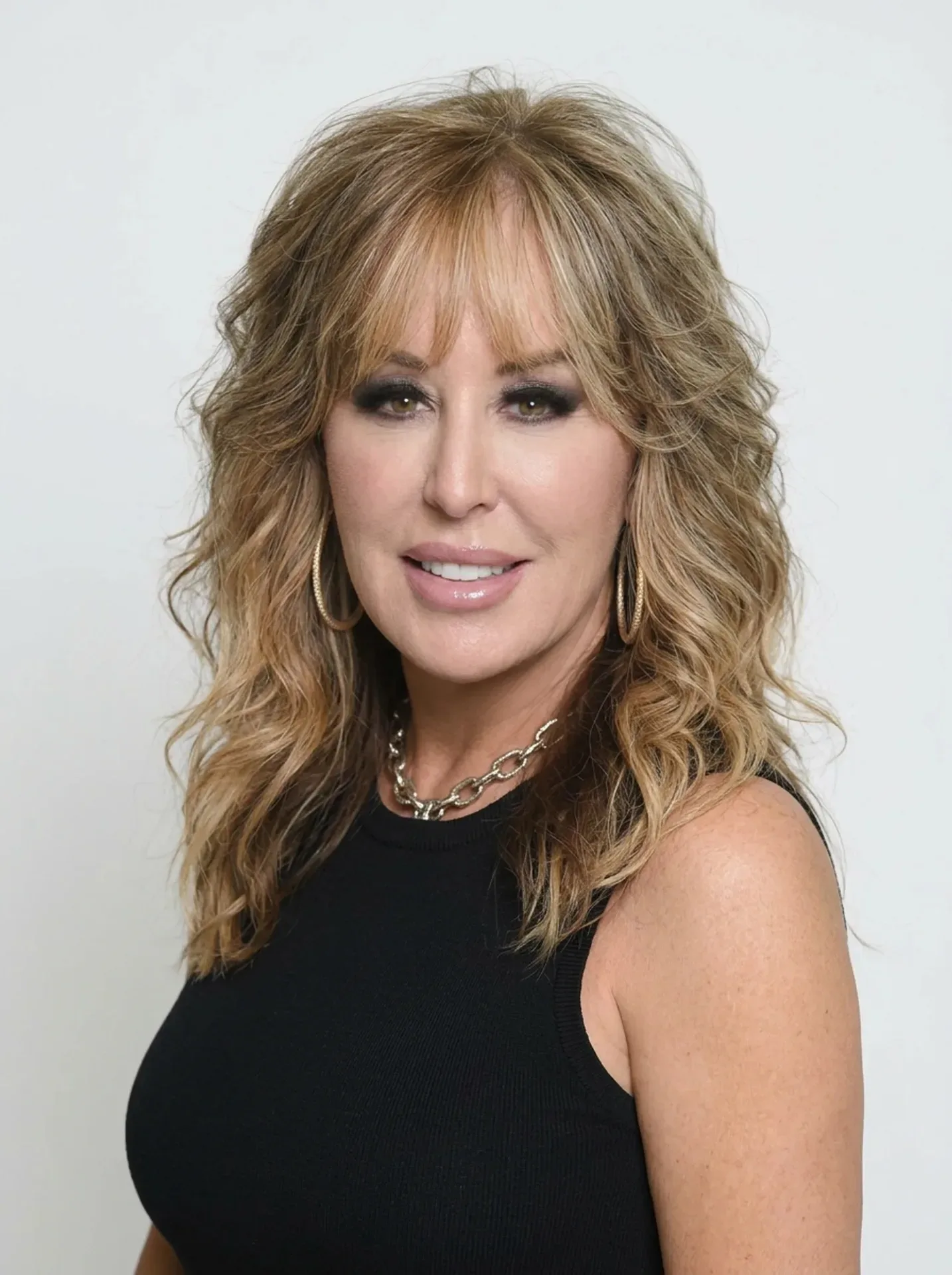
Every question about down payments, from minimum requirements to assistance programs to saving strategies. Answered by Lisa Copeland, the Central Texas market leader with over $5 billion in career sales and 20 years of experience.
Category 1
The amount varies by loan type from zero to 20 percent of the purchase price. FHA loans require as little as 3.5 percent, conventional loans require 3 to 20 percent, and VA and USDA loans offer zero-down options for eligible buyers. The average first-time buyer in Texas puts down roughly 6 to 7 percent. Lisa Copeland helps buyers identify the lowest down payment option they qualify for based on their credit, income, and home buying goals.
The absolute minimum down payment is 3 percent for some conventional loan programs (Fannie Mae HomeReady and Freddie Mac HomeOne), 3.5 percent for FHA, and 0 percent for VA and USDA loans. The key is finding the program that fits your financial profile. Lisa Copeland guides first-time buyers to the loan program with the lowest down payment requirement they qualify for.
Yes, Fannie Mae's Conventional 97 program and Freddie Mac's HomeOne program allow qualified buyers to put as little as 3 percent down on a conventional loan. You will need a credit score of 620 or higher and will pay PMI until you reach 20 percent equity. Lisa Copeland connects buyers with lenders who offer these low-down-payment conventional programs and can check if you qualify.
FHA loans require a minimum down payment of 3.5 percent with a credit score of 580 or higher. If your credit score is between 500 and 579, you can still qualify with a 10 percent down payment. The down payment can come from savings, a gift from a family member, or down payment assistance. Lisa Copeland helps buyers with lower credit scores find FHA lenders who can work with their specific situation.
Conventional loans typically require 5 to 20 percent down, though some programs allow as little as 3 percent for qualified first-time buyers. A down payment under 20 percent requires PMI. The minimum credit score for conventional loans is 620. Lisa Copeland recommends conventional loans for buyers with good credit and at least 5 percent down who want to avoid FHA's lifetime mortgage insurance.
VA loans require zero down payment for eligible active-duty military, veterans, National Guard, Reserves, and surviving spouses. There is no minimum credit score set by the VA, though individual lenders may have their own requirements. VA loans also do not require PMI. Lisa Copeland is a Military Relocation Professional who helps military families near Fort Cavazos and across Texas use their VA benefit to buy with nothing down.
USDA loans require zero down payment for eligible buyers purchasing homes in designated rural and suburban areas. The property must meet USDA eligibility requirements, and there are income limits that vary by location and household size. USDA loans require an upfront guarantee fee and annual fee. Lisa Copeland can check if your target Central Texas community is in a USDA-eligible area.
The timeline depends on your savings rate and target down payment amount. Saving 5 percent on a $300,000 home means saving $15,000. At $500 per month, that takes 30 months. At $1,000 per month, 15 months. Texas down payment assistance programs can also reduce the amount you need to save. Lisa Copeland helps buyers create a realistic timeline based on their income, expenses, and the assistance programs available to them.
Aim to save 10 to 20 percent of your take-home pay for a down payment. For someone earning $60,000 per year, that is $500 to $1,000 per month. The key is consistency. Even $300 per month adds up to $18,000 in five years, which is a 6 percent down payment on a $300,000 home. Lisa Copeland helps clients set a monthly savings target that is aggressive enough to meet their timeline but realistic enough to sustain.
A down payment savings plan is a structured approach to saving for your home purchase. It includes a target amount, a monthly savings goal, a dedicated high-yield savings account, automatic transfers, and milestones to track progress. Some plans also incorporate side hustles, tax refunds, and bonuses. Lisa Copeland provides a down payment savings plan template to every first-time buyer she works with, customized to their income and target home price.
Category 2
Texas offers several down payment assistance programs through the Texas Department of Housing and Community Affairs (TDHCA), the Texas State Affordable Housing Corporation (TSAHC), and local city and county programs. These programs provide grants, deferred forgivable loans, and low-interest second mortgages to help with down payments and closing costs. Lisa Copeland helps buyers determine which programs they qualify for based on their income, credit score, and target location.
The Texas State Affordable Housing Corporation (TSAHC) is a nonprofit that offers down payment assistance programs for first-time home buyers across Texas. Their programs include the Homes for Texas Heroes program for teachers, police officers, and other public servants, as well as general first-time home buyer programs. Assistance amounts range from 3 to 5 percent of the purchase price. Lisa Copeland checks TSAHC eligibility for every first-time buyer she works with.
The Texas Department of Housing and Community Affairs (TDHCA) administers the Texas First Time Homebuyer Program, which offers 30-year fixed-rate mortgages with down payment assistance of up to 5 percent of the loan amount. Buyers must complete a home buyer education course and meet income and purchase price limits. Lisa Copeland helps buyers navigate TDHCA requirements and connects them with approved lenders who participate in the program.
The SETH (Southeast Texas Housing Finance Corporation) 5-Star program offers down payment assistance of up to 5 percent of the loan amount for qualified home buyers in participating Texas counties. It is available to both first-time and repeat buyers who meet income and credit requirements. Lisa Copeland helps buyers in Central Texas check if their target county participates in the SETH program.
Texas has several grant programs that do not need to be repaid. TSAHC offers grants of 3 to 5 percent of the purchase price. TDHCA offers up to 5 percent in assistance. Many local cities and counties offer their own grant programs as well. These grants can cover the entire down payment on an FHA loan for a $200,000 home. Lisa Copeland maintains a current list of all grant programs available to Central Texas buyers.
Yes, down payment grants are available through state and local programs. Unlike loans, grants do not have to be repaid as long as you live in the home for a specified period (typically three to five years). These grants can cover 3 to 5 percent of the purchase price. Lisa Copeland helps buyers find and apply for grant programs they qualify for based on their income, occupation, and location.
A forgivable loan is a second mortgage that is forgiven over time, typically over three to five years, as long as you continue living in the home as your primary residence. If you sell or move before the forgiveness period ends, you may need to repay a prorated portion. Lisa Copeland recommends forgivable loan programs for buyers who plan to stay in their home for at least five years, as they effectively function as grants.
Apply through an approved lender who participates in the assistance program. You will need to meet income and credit requirements, complete a home buyer education course, and provide documentation of your financial situation. The lender handles the application and coordinates with the program administrator. Lisa Copeland works with lenders who specialize in down payment assistance programs and can guide you through the entire application process.
Eligibility varies by program but typically includes income limits (usually 80 to 120 percent of the area median income), minimum credit score requirements (often 620 or higher), completion of a home buyer education course, and a home purchase price within program limits. Some programs are limited to first-time buyers, while others are open to repeat buyers. Lisa Copeland checks eligibility for multiple programs to find the best fit.
Most down payment assistance programs require a minimum credit score of 620, though some programs accept scores as low as 580 if you are using an FHA loan. Higher scores may qualify you for larger assistance amounts. Lisa Copeland advises buyers to check their credit score before applying for assistance and to work on improving it if needed to qualify for better programs.
Category 3
A down payment is the cash you pay upfront toward the home purchase, with the remaining balance financed through a mortgage. It is important because it reduces the lender's risk, determines your loan-to-value ratio, affects your interest rate, and determines whether you need PMI. A larger down payment means lower monthly payments and more instant equity. Lisa Copeland explains the role of the down payment in the overall home buying transaction.
A down payment is important because it builds instant equity, reduces your monthly payment, and shows the lender you are financially committed. A larger down payment can also help you qualify for a better interest rate and avoid PMI. Lenders view buyers with substantial down payments as lower risk. Lisa Copeland helps buyers understand that every dollar of down payment saves them money in the long run.
A larger down payment reduces your loan amount, lowers your monthly payment, eliminates PMI (if you reach 20 percent), may qualify you for a lower interest rate, and builds instant equity. A 20 percent down payment on a $300,000 home saves roughly $200 to $300 per month compared to a 5 percent down payment. Lisa Copeland runs the numbers to show clients the long-term savings of a larger down payment.
PMI (private mortgage insurance) protects the lender when your down payment is less than 20 percent. You can avoid PMI by making a 20 percent down payment, using a VA or USDA loan (which have no PMI), or using a piggyback loan (80/10/10 structure). PMI typically costs 0.5 to 1.5 percent of the loan amount annually. Lisa Copeland helps buyers weigh the cost of PMI against the benefit of buying sooner with a smaller down payment.
PMI typically costs 0.5 to 1.5 percent of the loan amount per year, which translates to roughly $50 to $150 per month on a $200,000 loan. The exact cost depends on your credit score, down payment amount, and loan type. PMI can be removed once you reach 20 percent equity. Lisa Copeland always factors PMI into her clients' monthly cost estimates so they see the full picture.
PMI automatically terminates when your loan balance reaches 78 percent of the original home value (22 percent equity). You can request earlier cancellation when you reach 80 percent (20 percent equity) based on the original value, or at any point if you get a new appraisal showing sufficient appreciation. Lisa Copeland advises buyers to track their equity and request PMI removal as soon as they qualify.
Loan-to-value ratio (LTV) is your loan amount divided by the home's value, expressed as a percentage. A $240,000 loan on a $300,000 home equals 80 percent LTV. LTV affects your interest rate, PMI requirement, and loan approval. Lower LTV means less risk for the lender and better terms for you. Lisa Copeland helps buyers understand their LTV and how their down payment affects it.
A larger down payment typically qualifies you for a lower interest rate because the lender sees less risk. Going from 5 percent down to 20 percent down can reduce your rate by 0.25 to 0.5 percentage points, saving thousands over the life of the loan. Lisa Copeland shows clients how even a slightly higher down payment can significantly reduce their total interest costs over 30 years.
Putting 20 percent down is ideal because it eliminates PMI and gives you the best rates, but it is not necessary and should not stop you from buying if you can afford the monthly payment with a smaller down payment. Many successful first-time buyers put down 3 to 10 percent and build equity over time. Lisa Copeland helps buyers run the numbers to decide whether waiting for 20 percent or buying sooner with less down makes more sense for their situation.
Most first-time buyers do not put 20 percent down, and there are many excellent options for lower down payments. FHA loans require 3.5 percent down, conventional 97 requires 3 percent, and VA and USDA require zero. Down payment assistance programs can cover some or all of the required down payment. Lisa Copeland helps buyers explore all the low-down-payment options available and never lets the 20 percent myth delay their homeownership goals.
Category 4
Yes, you can borrow from your 401k through a plan loan, typically up to 50 percent of your vested balance or $50,000, whichever is less. You repay yourself with interest, typically over five years. If you leave your job, the remaining balance may be due immediately. Some plans also allow hardship withdrawals. Lisa Copeland advises clients to weigh the pros and cons carefully and consult a financial advisor before tapping retirement funds.
Yes, first-time home buyers can withdraw up to $10,000 from a traditional or Roth IRA without the 10 percent early withdrawal penalty, though income taxes may apply on traditional IRA withdrawals. Roth IRA contributions can be withdrawn at any time tax-free and penalty-free. Lisa Copeland helps clients understand the tax implications and decide whether their IRA is a good source of down payment funds.
A 401k loan lets you borrow money from your retirement account and repay it with interest to yourself. Many plans allow borrowing for a primary home purchase, with repayment terms of up to 15 years (vs. 5 years for non-housing loans). The interest rate is typically prime plus 1 percent. Lisa Copeland helps clients check their 401k plan rules and decide if a loan is the right strategy for their situation.
The donor must sign a gift letter stating the amount, that it is a gift not a loan, and that no repayment is expected. You will also need to provide a paper trail showing the funds transferred from the donor's account to yours. Most lenders require the gift funds to be seasoned (sitting in your account) for 60 to 90 days. Lisa Copeland walks buyers through the gift documentation process so there are no delays in their loan approval.
Gift funds for conventional loans must come from a relative (parent, sibling, grandparent, etc.), domestic partner, or fiancΓ©. FHA loans allow gifts from employers, charitable organizations, and close friends with a documented interest in the buyer. VA loans allow gifts from anyone. Lisa Copeland verifies the gift source rules for each loan type to ensure compliance and smooth processing.
Accelerate your savings by automating transfers to a high-yield savings account, cutting discretionary spending, taking on a side hustle, directing tax refunds and bonuses straight to savings, using a no-spend month quarterly, and negotiating lower bills. Combining several strategies can double your savings rate. Lisa Copeland helps clients create an aggressive but realistic accelerated savings plan.
Start with subscriptions you do not use, dining out, premium cable packages, expensive gym memberships, and impulse shopping. Many buyers free up $300 to $600 per month by auditing discretionary spending. Larger expenses like car payments and insurance can also be optimized. Lisa Copeland helps clients identify the five highest-impact expense cuts that will not feel like deprivation.
Open a separate high-yield savings account specifically for your down payment. Set up an automatic transfer from your checking account on payday for a fixed amount. Even $100 per paycheck adds up to $2,600 per year. Increase the amount with every raise or bonus. Lisa Copeland tells every client that automation is the most powerful savings tool because it removes the temptation to spend the money.
Sell unused items through online marketplaces like Facebook Marketplace, Craigslist, Poshmark, or eBay. Focus on high-value items like furniture, electronics, collectibles, vehicles, and musical instruments. Many downsizers raise $2,000 to $10,000 by selling things they no longer need. Lisa Copeland recommends starting the decluttering process early as it both raises cash and prepares you for the move.
Absolutely. Your tax refund can be a significant boost to your down payment savings. The average tax refund is roughly $3,000, which is 3 percent down on a $100,000 home. To maximize this, adjust your W-4 withholding so you get a larger refund specifically for your down payment goal. Lisa Copeland recommends directing your entire tax refund to your down payment account as a once-a-year savings boost.
Category 5
A piggyback loan, often structured as an 80/10/10, involves taking a first mortgage for 80 percent of the home's value, a second mortgage for 10 percent, and putting 10 percent down. This avoids PMI because the first mortgage is at 80 percent LTV. The second mortgage typically has a higher interest rate. Lisa Copeland explains that piggyback loans can make sense for buyers who have 10 percent but not 20 percent down.
An 80/10/10 loan is a type of piggyback mortgage where you put 10 percent down, take a first mortgage for 80 percent of the price, and a second mortgage for the remaining 10 percent. The first mortgage avoids PMI because it is at 80 percent LTV. The second mortgage is often a home equity line of credit (HELOC) or a fixed-rate loan. Lisa Copeland helps buyers compare the cost of PMI vs. a piggyback loan.
No-down-payment loans include VA loans (for eligible military members and veterans) and USDA loans (for eligible rural and suburban properties). These loans finance 100 percent of the home's purchase price. While they require no down payment, some have funding fees or guarantee fees. Lisa Copeland helps eligible buyers understand the true cost of zero-down loans and whether they are the best option.
Some down payment assistance programs can be combined with others, but many have restrictions. For example, a TDHCA grant can often be combined with an FHA or conventional loan but not with another state program. Your lender will determine which programs can be layered. Lisa Copeland works with lenders who specialize in stacking assistance programs to maximize the help first-time buyers receive.
Income limits vary by program and county. Most Texas programs set limits at 80 to 120 percent of the area median income. For example, in Travis County, the limit for a two-person household might be $75,000 to $95,000 depending on the program. These limits are adjusted annually. Lisa Copeland checks current income limits for all programs available in your target county.
A side hustle adds income directly to your savings. Whether it is freelance writing, rideshare driving, pet sitting, or selling products online, an extra $500 per month adds $6,000 per year to your down payment fund. After two years of documented side income, it may also help you qualify for a larger mortgage. Lisa Copeland encourages buyers to use their skills and hobbies to generate extra savings.
Research market rates for your position, document your achievements, and schedule a performance review with your manager. A well-prepared request for a raise of 5 to 15 percent is reasonable. Even a $5,000 raise translates to roughly $3,000 more per year after taxes, which could be directed entirely to your down payment. Lisa Copeland recommends timing salary negotiations with your home buying timeline.
A signing bonus is a one-time payment some employers offer when you accept a job. Yes, you can use a signing bonus for a down payment. Most lenders require only that the funds be documented and seasoned. Some employers even offer relocation assistance that can be used toward housing costs. Lisa Copeland helps clients who are relocating for work maximize their employer-provided housing benefits.
Break your goal into milestones (first $5,000, 50 percent of target, full goal) and celebrate each one. Create a visual savings tracker, join a community of other first-time buyers, visit open houses in your target neighborhood regularly, and keep a journal of why you are saving. Lisa Copeland shares her clients' success stories to show that the sacrifice is temporary but homeownership lasts a lifetime.
Use a dedicated savings tracker, whether a spreadsheet, app, or a simple chart on your wall. Track your monthly deposits, interest earned, and percentage of your goal reached. Review your progress every month and adjust your savings rate if you fall behind. Lisa Copeland provides every first-time buyer with a down payment savings tracker and checks in on their progress so they stay accountable and motivated. For personalized guidance on saving for your down payment, contact Lisa Copeland at 512-944-5472.
More FAQs
Talk to Lisa
Lisa Copeland helps first-time buyers create personalized down payment savings plans. Call, email, or schedule a consultation to get started on your homeownership journey.
TX License #733507 | Lisa Copeland | Exp Realty
Whether you are buying, selling, investing, or exploring options, the best negotiator in Central Texas is ready to put $5B+ in career experience to work for you.
Office
Lisa Copeland
210 E. Central
Belton, TX 76513
License
TX Salesperson #733507
Lisa Copeland's Team
Typically replies in minutes
Hi! I'm Lisa Copeland's team. How can we help you with your Central Texas real estate needs?