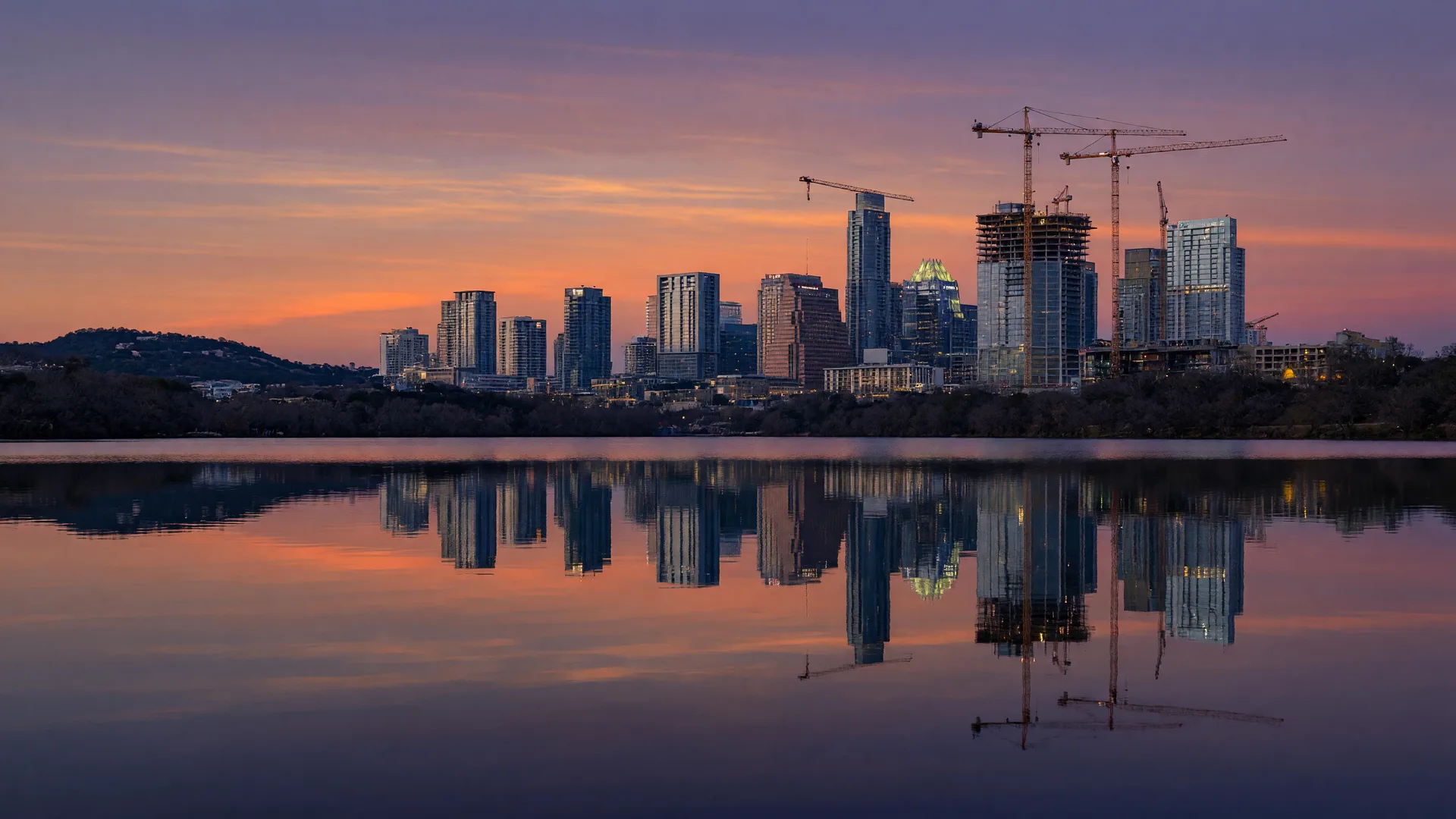
Austin has been one of the hottest housing markets in the country for over a decade, and 2026 is no exception. While some predicted a cooling after the pandemic-era frenzy, the Austin market has proven remarkably resilient. Home prices remain strong, demand continues to outpace supply, and the city's economic fundamentals are as solid as ever. Here is why the Austin housing market is still booming in 2026.
Population Growth Is Not Slowing Down
The Austin metro area continues to add approximately 100 to 150 new residents every day. People are moving from California, New York, Illinois, and other high-cost states, drawn by Texas's no-income-tax environment, lower cost of living, and vibrant job market. This steady influx of new residents creates consistent housing demand across every price point. Until population growth slows significantly, the Austin housing market will remain strong.
Job Growth and Economic Diversification
Austin's economy is more diversified than ever. While technology remains the dominant sector, with major employers including Apple, Google, Tesla, and Samsung expanding their presence, the city has also seen growth in healthcare, education, advanced manufacturing, and creative industries. The Tesla Gigafactory, the Samsung semiconductor plant in Taylor, and the continued expansion of the tech corridor mean well-paying jobs are being created faster than they can be filled. Job growth drives housing demand.
Inventory Remains Constrained
While inventory has improved from the historic lows of 2021 and 2022, it is still below what economists consider a balanced market. Months of inventory hovers around 2.5 to 3 months, meaning it would take that long to sell all available homes at the current sales pace. A balanced market is typically 4 to 6 months. Until new construction catches up with population growth or existing homeowners list in greater numbers, the supply shortage will continue to support home prices.
Interest Rates Have Stabilized
After the rapid interest rate increases of 2022 and 2023, rates have stabilized in a range that buyers have adjusted to. While rates are higher than the historic lows of 2020 and 2021, they remain reasonable by historical standards. Buyers have adapted by adjusting their budgets, exploring adjustable-rate mortgages, and using rate buy-downs offered by builders and sellers. The market has found a new equilibrium that still supports strong demand.
Austin's Quality of Life
Underlying all the economic data is a simple truth: people want to live in Austin. The city offers a unique combination of outdoor recreation, live music and culture, a food scene that rivals much larger cities, and a climate that allows year-round outdoor activity. Lady Bird Lake, Barton Creek, the Greenbelt, and the Hill Country provide a natural playground that few cities can match. As long as people want to live in Austin, the housing market will remain strong.
My Outlook
I bring 30+ years of real estate and mortgage experience and have been a Texas Realtor since 2020. The fundamentals that make Austin strong are still in place. I expect continued growth, stability, and opportunity for buyers and sellers alike.
Navigating the Austin Market
Let Lisa Guide You Through Austin Real Estate
Lisa Copeland brings 30+ years of real estate and mortgage experience and has been a Texas Realtor since 2020. With leadership of a 900+ Agent real estate organization operating across 29 countries that has closed more than 5 billion in sales over the last six years, she knows how to navigate the Austin market in any conditions.

Lisa Copeland
Visit Lisa's speaker and author site at lisacopeland.com.
Lisa Copeland is the dominant market leader in Central Texas real estate and leads a 900+ Agent real estate organization operating across 29 countries that has closed more than 5 billion in sales over the last six years. She brings 30+ years of real estate and mortgage experience and has been a Texas Realtor since 2020.